An office you can walk into. With agents who actually work.
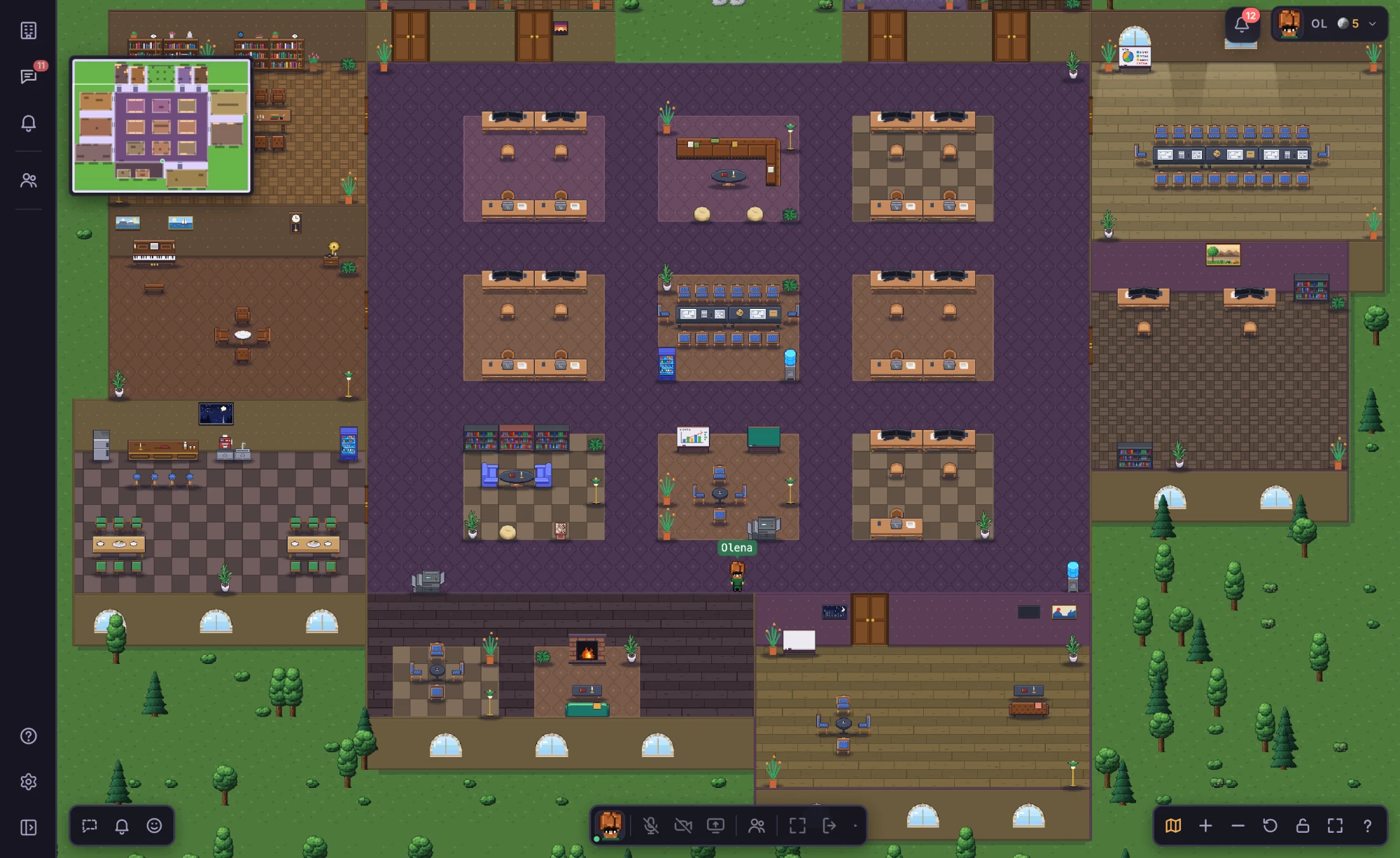
HiveSync is a pixel-art house of offices for teams that work apart: see who is free and walk up to talk, knock on a door, seat an AI agent at a desk and hand it a task, play a round of ping-pong after the standup.
A character for every office. No download, no meeting link.
Made for teams that work apart
Presence without a meeting link
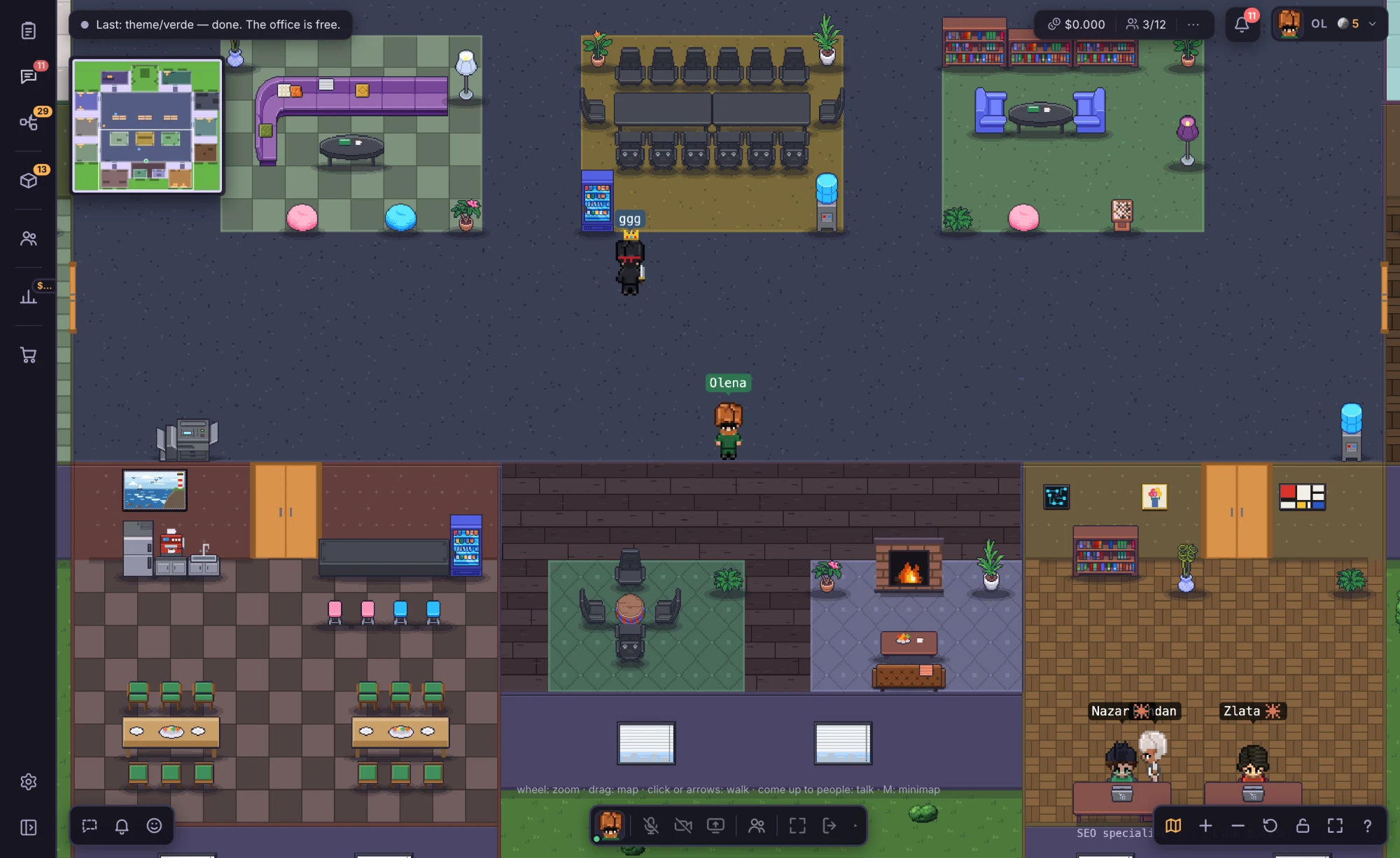
Your character stands where you are: at a desk, in a meeting room, by the coffee. Who is free is seen, not asked.
Agents at the desks
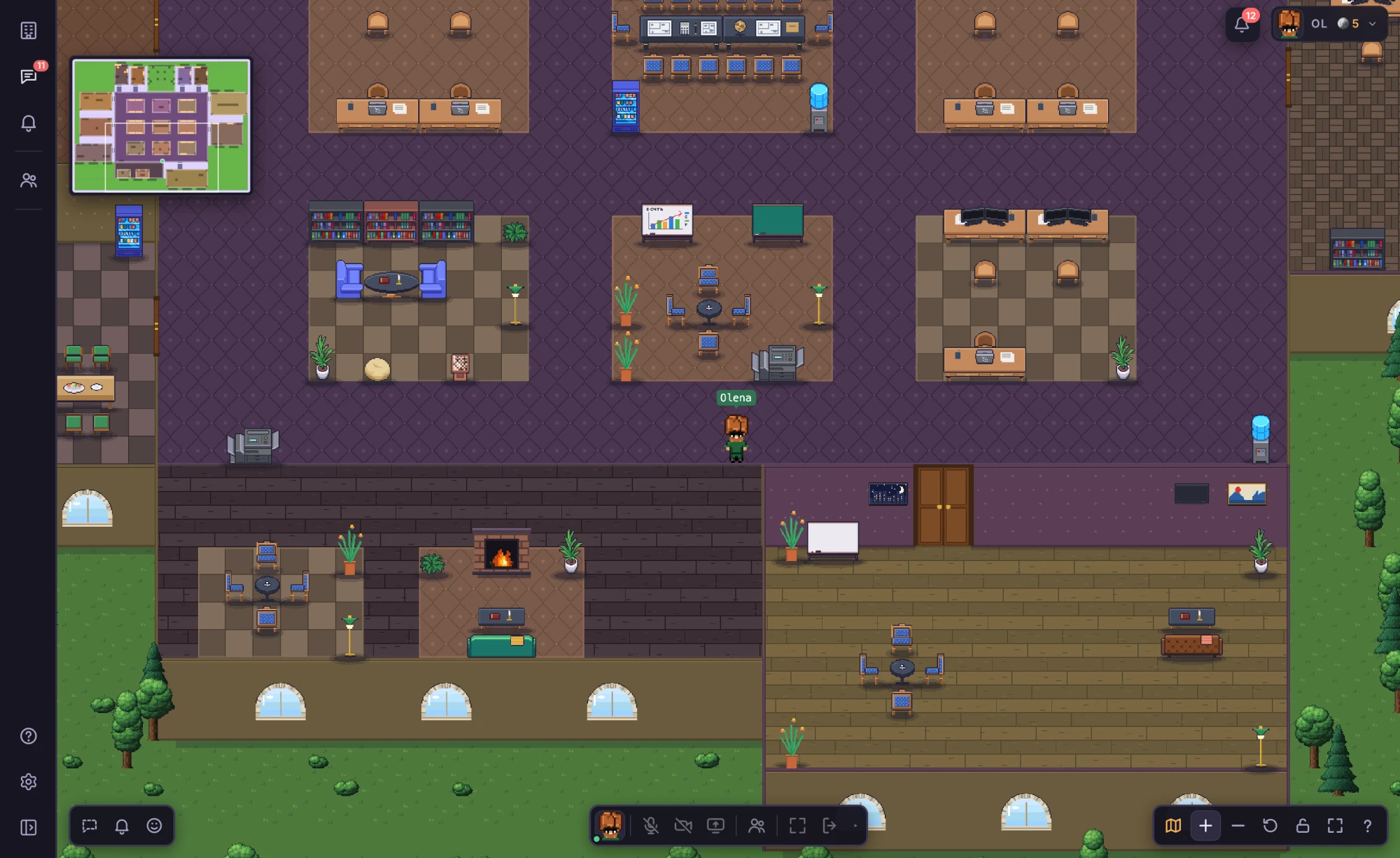
An AI agent is a colleague with a desk: a persona, a brain of its own, tasks given by walking up or by a workflow.
One house for everything
Offices, chats, calls, planning poker and games in one place, under one character, in your organisation.
Skip the scheduling. Walk over.
A talk starts the way it does in a real office: you come up, you ask, they agree. Nobody hears anybody by accident.
See who is free
Everybody on the floor is a character: at a desk, in a room, away. A status says «do not disturb» before you walk.
Come up to talk
Voice, camera and screen by proximity: a few tiles on the open floor, the whole room behind a door.
Knock on a door
A cabinet with its door shut is private. Knock, and the one inside lets you in or not.
A meeting is a room
Walk into the boardroom and you are in the meeting; walk out and you are not. No link, no lobby, no «can you hear me».
Calls across floors
Ring a colleague in another office; the dock shows the call, one click answers it.
Bubbles over heads
A line said nearby floats over the head; the whole office hears an announcement. Reactions too.


Seat an AI agent. Give it a desk, a name and work.
An agent in HiveSync is not a chat box. It sits at a desk of your office with a persona and a brain of its own, and takes tasks the way a colleague does.
A persona from a template
A developer, a reviewer, a copywriter, a designer: a name, a sprite, a role, the rules it works by. Make your own.
A brain of your choice
Claude Code, Codex, Grok: a headless CLI in a container of its own, with your token or the organisation’s.
Errands
Walk up to an agent and give it a task directly. It works in a folder of its own and brings the result back to you.
Workflows on a canvas
Chain agents, conditions, loops and merges like in n8n: a task walks the office from desk to desk.
Jira, GitLab, MCP
Agents read and write issues, open merge requests, and use the MCP servers you connect to your account.
Your code stays with you
A runner on your own machine holds the repositories and the containers. The studio asks and hands on; it keeps nothing.
Everything said, kept in one place
A talk of two, a group, a channel of the organisation, the common chat of a room: with files, threads, pins, saved lines and search. Mention an agent with @ and it answers.
- Talks of two and groups
- Channels, open and closed
- The chat of every room
- Threads, pins, saved lines
- Files and pictures
- @agent in any chat
- Search across everything
- Ctrl+K to jump anywhere
An office in two minutes, in your theme
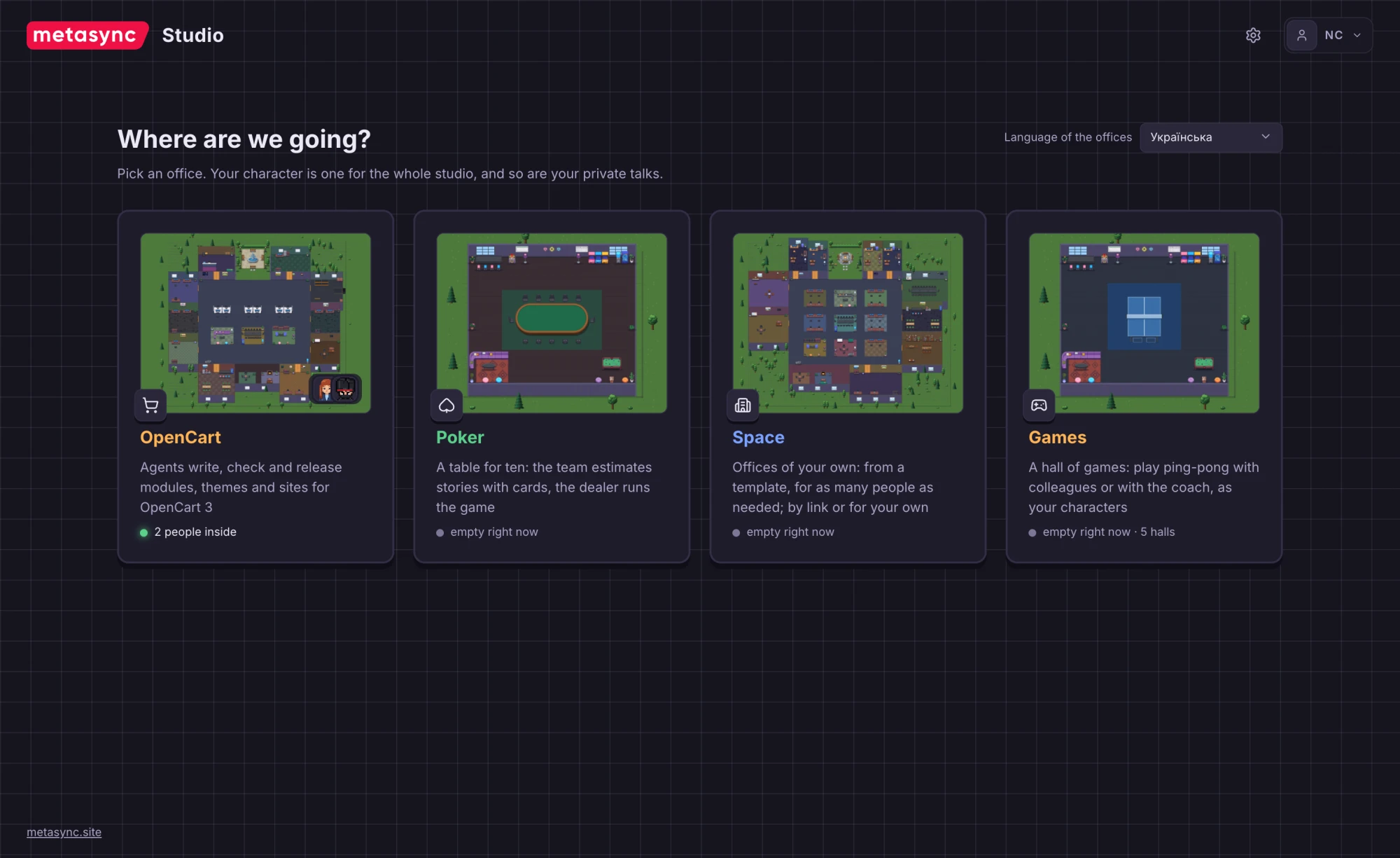
Pick a template, a theme and how many people; the generator lays the floor: rooms of their own size on four sides, a courtyard, windows, paintings on the walls.
Templates
- Office: teams on islands, a boardroom, a library, cabinets, a lounge
- Cowork: one open hall of white desks
- Cabinets: a hall with rooms behind doors
- Lounge: no desks, just corners to sit in
- Conference: an all-hands hall with a stage
Themes
Rooms of two kinds
A closed office is for the people of your organisation. A session office is for whoever has the link: guests make a character and walk in, no account, a password if you like.
Estimate the sprint at the poker table. Then a game.
The hall of games and the poker office are offices like any other: you walk in as your character and sit down.
Planning poker
A table for ten: stories from Jira, cards laid face down, the dealer opens them, the points go back to Jira. A session table for a team with no accounts.
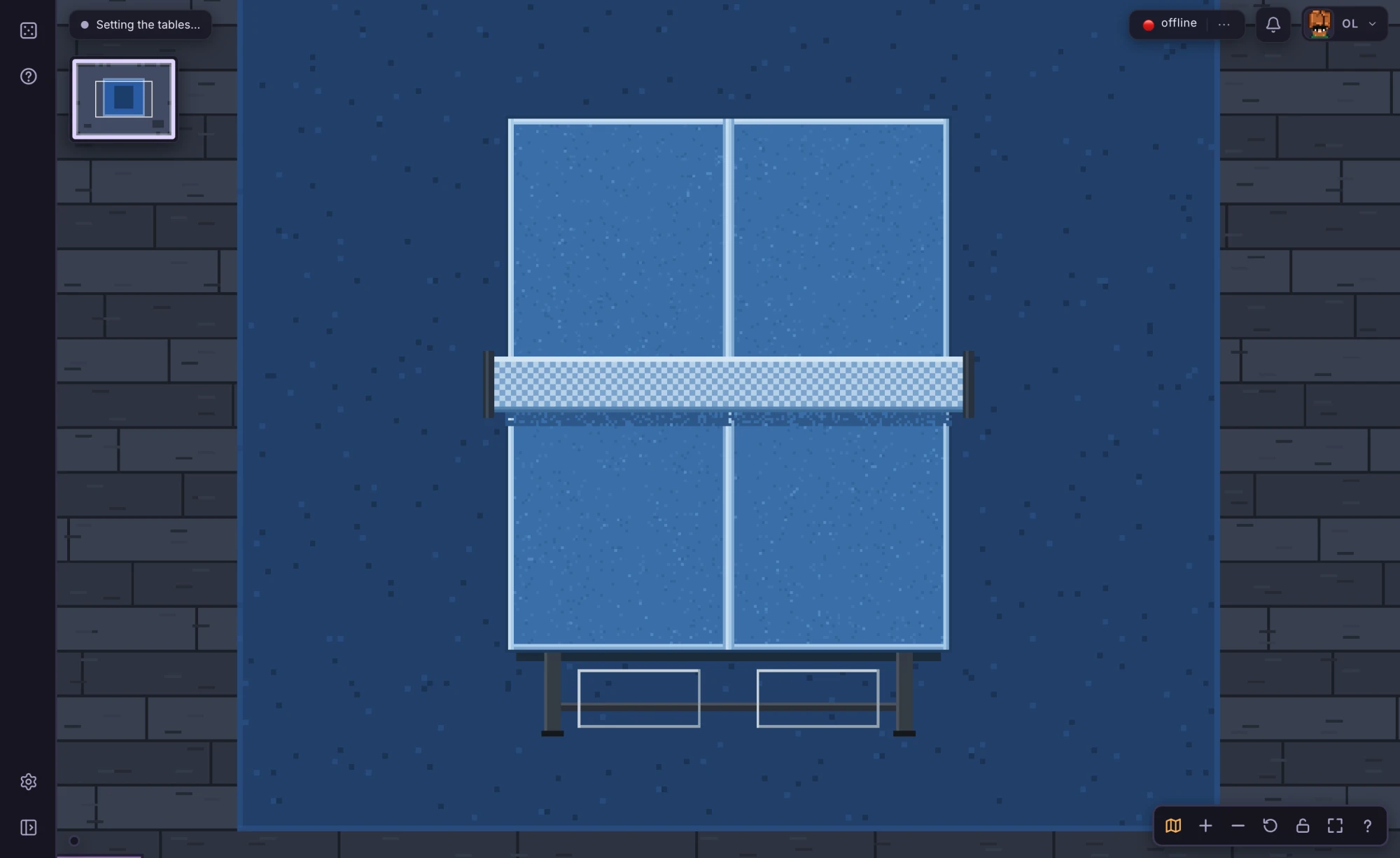
Ping-pong
Two players at the table, the coach when nobody is around. The score on the wall.
Air hockey, table football, darts
Tables on the floor of the hall; whoever comes up plays.
Mafia
A round table, the night and the day, the coach as the host.
A small economy inside
The first entry of the day, a story estimated, a game won: coins and experience, levels, and a wardrobe of looks and things to wear. Certificates for what was done.
What if remote work felt less… remote?
Calls and chats
- A meeting link for a two-minute question
- A message that waits an hour for a reply
- Camera on, or you are not there
- Who is busy? Nobody knows
- The AI assistant is a tab somewhere
HiveSync
- Walk up and ask
- See who is free before you walk
- Presence without a camera
- A shut door means busy
- The agent sits at the next desk
Built for organisations
The runner is yours
The code of your offices and the containers of your agents live on a machine of your organisation, never on the studio.
Tokens in a vault
What you connect — Jira, GitLab, MCP servers, your own model token — is sealed for you alone and given to an agent for one run.
Accounts and roles
Organisations with owners, admins and members; one account in many organisations; a second factor; invitations by link or email.
Two languages
Ukrainian and English for the panel; the offices speak the language of their organisation, and the agents too.
Three steps to an office
Make an organisation
An account, your organisation, the people invited by a link or by email. Google sign-in and a second factor.
Create an office
A template, a theme, the size. The floor is laid at once; walk it before anybody else comes.
Invite the team, seat the agents
Everybody picks a look and a name. An admin seats agents at the desks and connects Jira and GitLab.
An office you can walk into. With agents who actually work.
A character for every office. No download, no meeting link.
Open your officeQuestions
What is HiveSync?
A virtual office in pixel art: your team walks a floor as characters, talks by proximity, and works beside AI agents seated at the desks. Offices, chats, calls, planning poker and games in one house.
Which models do the agents run on?
Claude Code, Codex and Grok through their command-line tools, each in a container of its own on your runner. You bring a token of yours, or the organisation’s.
Do my repositories go to your servers?
No. A runner on a machine of your organisation holds the repositories and the containers of the agents; the studio asks and hands on, and keeps nothing of it.
Can people without an account join?
Yes, by a session link: a poker table, a game hall or an office for one session. Guests make a character and walk in; the room disappears by itself once everybody has left.
Does it work in a browser?
Yes, on a desktop or a phone, no download. Voice and video go browser to browser; a TURN server of ours relays when a network will not.